
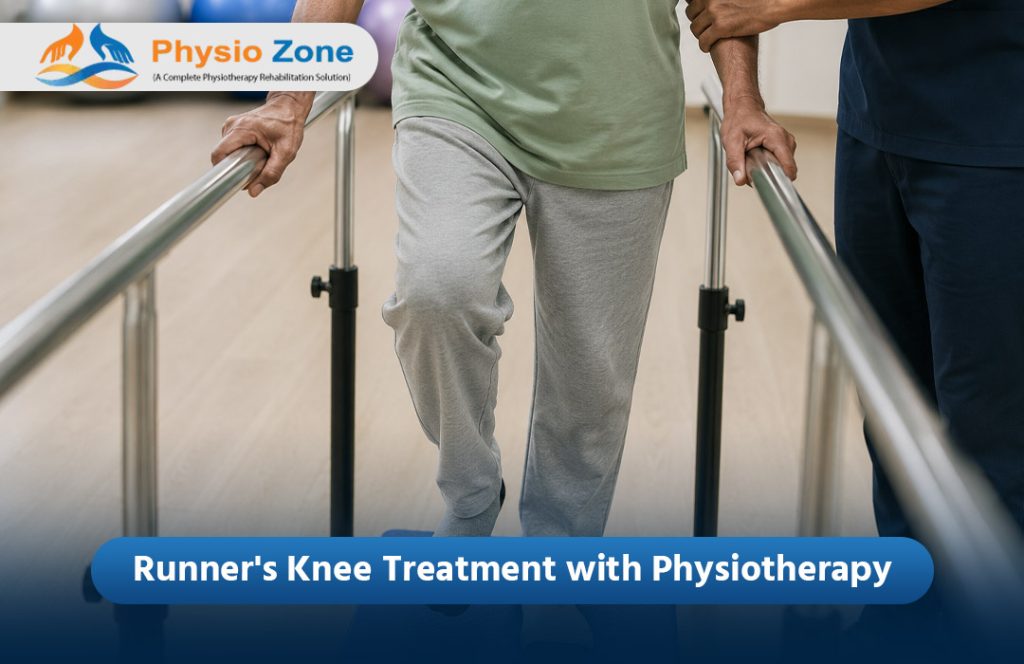
Runner’s knee is one of the most common complaints among runners, joggers, and even people who are simply active on their feet throughout the day. Despite the name, it does not only affect competitive runners. Anyone who walks, climbs stairs, cycles, or exercises regularly can develop this condition. If left untreated, runner’s knee can turn a manageable ache into a persistent problem that limits daily activity and derails fitness goals.
This guide explains what runner’s knee is, why it happens, and how physiotherapy at Physio Zone BD helps patients recover fully and get back to running without pain.
What Is Runner’s Knee
Runner’s knee, medically known as patellofemoral pain syndrome, refers to pain around or behind the kneecap. It typically develops gradually rather than from a single injury, often worsening with activities that put repeated stress on the knee joint, such as running, squatting, climbing stairs, or sitting for long periods with the knee bent.
Common Symptoms of Runner’s Knee
Patients with runner’s knee often experience a dull, aching pain around or under the kneecap, discomfort that worsens with running, squatting, or climbing stairs, pain after sitting for extended periods with the knees bent, and sometimes a clicking or grinding sensation in the knee during movement. In more advanced cases, mild swelling around the knee joint may also be present.
What Causes Runner’s Knee
Runner’s knee usually develops due to a combination of factors rather than a single cause. Common contributing factors include muscle imbalances, particularly weakness in the thigh muscles that support the kneecap, poor alignment of the kneecap within its groove, overuse from a sudden increase in running distance or intensity, improper running form or footwear, and tightness in surrounding muscles such as the hamstrings, calves, or hip muscles. Because the underlying cause varies from person to person, effective treatment requires a proper assessment rather than generic advice.
Why Ignoring Runner’s Knee Is a Mistake
Many runners try to push through knee pain, assuming it will resolve with rest alone. While mild cases may improve temporarily, continuing to run or train without addressing the underlying cause often leads to the pain becoming chronic. Over time, this can also lead to compensatory issues elsewhere in the body, such as hip or lower back pain, as the runner unconsciously alters their movement pattern to avoid knee discomfort.
How Physiotherapy Treats Runner’s Knee
Physiotherapy is considered one of the most effective approaches to treating runner’s knee because it addresses both the pain and its root cause. At Physio Zone BD, treatment for runner’s knee falls under Musculoskeletal Physiotherapy, which focuses on conditions affecting joints, muscles, and ligaments, and is often combined with a sports-focused approach for active runners through Sports Physiotherapy.
Detailed Assessment
Treatment begins with a thorough evaluation of the knee joint, surrounding muscles, movement patterns, and running history. This helps the physiotherapist identify the specific factors contributing to the pain, whether it is muscle weakness, poor alignment, tightness, or training-related overuse.
Pain and Inflammation Management
In the early stages, treatment focuses on reducing pain and inflammation around the knee using techniques such as manual therapy, mobilization, and ultrasound. This helps create a more comfortable foundation for the corrective exercises that follow.
Strengthening Exercises
A key part of runner’s knee treatment involves strengthening the muscles that support proper kneecap alignment, particularly the quadriceps, hips, and glutes. Weakness in these areas is one of the most common underlying causes of runner’s knee, and targeted strengthening helps correct the imbalance.
Flexibility and Mobility Work
Tightness in the hamstrings, calves, and hip muscles can contribute to poor knee mechanics. Physiotherapists guide patients through stretching and mobility exercises to improve flexibility in these areas, reducing strain on the knee joint.
Movement and Running Form Correction
For runners, correcting movement patterns and running form is often essential to prevent the condition from returning. Physiotherapists may assess and provide guidance on stride, foot strike, and posture to reduce repetitive stress on the knee.
Gradual Return to Running
Rather than returning to full training too quickly, physiotherapists guide patients through a gradual, structured return to running, monitoring symptoms at each stage to ensure the knee can handle increasing activity without pain returning.
Preventing Runner’s Knee From Returning
Once the pain has resolved, prevention becomes the focus. This typically involves continuing strength and flexibility exercises, gradually increasing training load rather than making sudden jumps in distance or intensity, using appropriate footwear, and paying attention to early warning signs of discomfort before they develop into a full injury again.
Who Should Consider Physiotherapy for Runner’s Knee
Physiotherapy for runner’s knee is beneficial for recreational and competitive runners experiencing knee pain, athletes in sports involving running such as football and cricket, individuals who experience knee pain from walking, cycling, or climbing stairs, and patients who have tried rest alone without lasting improvement. Runners recovering from other lower-body sports injuries may also find it useful to review related guides on football injury recovery and gym injury treatment for a broader understanding of movement-related injuries.
What to Expect During Your First Visit
Your first visit at Physio Zone BD for runner’s knee includes a detailed assessment of your knee pain, movement patterns, and training history. Based on this evaluation, the physiotherapist develops a personalized treatment plan with clear goals, so you understand exactly what progress to expect at each stage of recovery.
Why Choose Physio Zone BD for Runner’s Knee Treatment
Physio Zone BD is recognized as one of the leading physiotherapy centers in Bangladesh, with a team of experienced, board-certified physiotherapists who use modern, evidence-based treatment techniques. You can learn more about the clinic and its team on the About Us page, and explore the complete range of treatments offered on the Services page.
Patients across Dhaka, including runners and active individuals, have shared positive feedback about their treatment and recovery. You can read verified reviews on the Testimonials page.
Home Service and Online Consultation
For patients who are unable to visit the clinic in person, Physio Zone BD offers a home service option, where a physiotherapist provides treatment directly at the patient’s home. An online consultation service is also available for those who need initial guidance or exercise recommendations without an in-person visit.
Location and Availability
Physio Zone BD is located at 22, Rabindra Sharani Road, Sector 7, Uttara, Dhaka-1230, on the 2nd floor of the Comfort Diagnostic Center. The clinic is open Saturday to Thursday, from 10 am to 9 pm.
Book Your Runner’s Knee Assessment Today
Runner’s knee is highly treatable when addressed properly, but ignoring the pain or relying on rest alone often leads to recurring problems. Getting a proper assessment and a targeted treatment plan gives you the best chance of running pain-free again.
Contact Physio Zone BD today at +8801978332936 or visit the Contact Us page to schedule your assessment and start your recovery with a team of experienced physiotherapy specialists.