
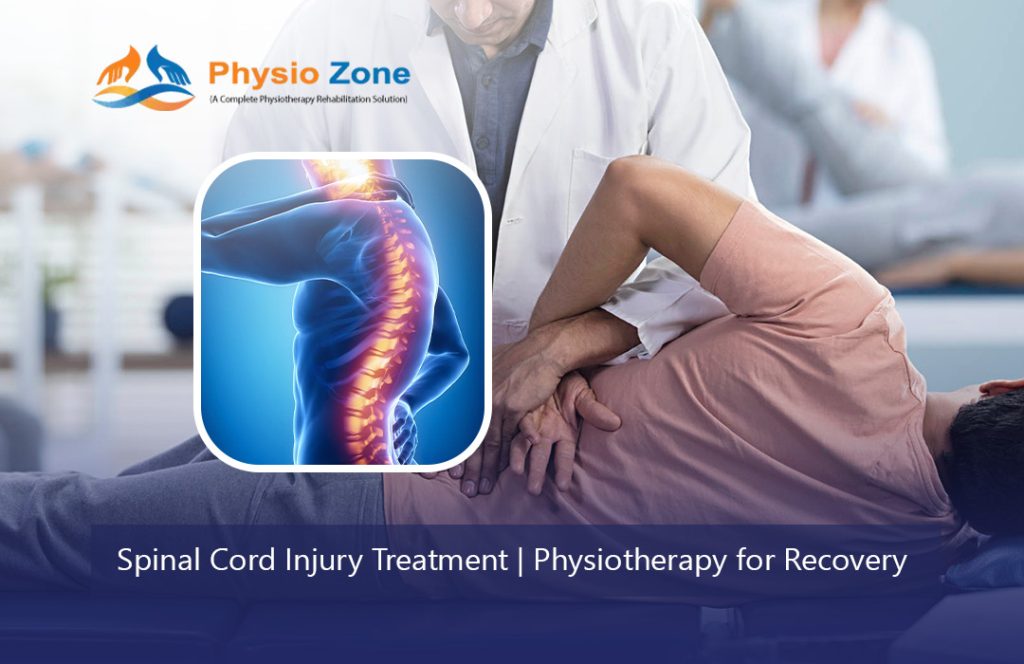
A spinal cord injury can change life suddenly and deeply. Movement, sensation, and daily independence can be affected. However, with proper spinal cord injury treatment, especially advanced physiotherapy, recovery and functional improvement become possible. At PhysioZone BD, specialized physiotherapy programs are provided to support safe recovery and long-term rehabilitation.
This guide explains causes, treatment options, and how physiotherapy plays a vital role in spinal cord injury recovery.
What Is a Spinal Cord Injury? Causes, Symptoms, and Severity Levels
A spinal cord injury (SCI) occurs when the spinal cord is damaged due to trauma or disease. This damage disrupts communication between the brain and the body.
Common causes include:
- Road traffic accidents
- Falls from height
- Sports injuries
- Violence or penetrating injuries
- Infections or tumors
Symptoms may include paralysis, loss of sensation, muscle weakness, breathing difficulty, and bladder or bowel problems. The severity depends on the injury level and extent of nerve damage.
Early Diagnosis and Medical Management of Spinal Cord Injury
Early diagnosis is critical for effective spinal cord injury treatment. MRI, CT scans, and neurological assessments are used to determine injury severity.
Initial medical management focuses on:
- Stabilizing the spine
- Reducing inflammation
- Preventing secondary damage
- Managing pain and complications
Once the condition is stabilized, physiotherapy is usually introduced as early as possible.
Role of Physiotherapy in Spinal Cord Injury Treatment and Recovery
Physiotherapy is considered a cornerstone of spinal cord injury treatment. Recovery potential is improved when therapy is started early and continued consistently.
Physiotherapy helps by:
- Preserving muscle strength
- Preventing joint stiffness
- Improving circulation
- Enhancing nerve stimulation
- Supporting independence
At Physio Zone BD, individualized rehabilitation plans are designed based on injury type and patient goals.
Types of Spinal Cord Injuries: Complete vs Incomplete Injuries Explained
Spinal cord injuries are classified into two main types:
Complete Injury:
No motor or sensory function exists below the injury level.
Incomplete Injury:
Some movement or sensation remains. Recovery chances are usually higher.
Understanding the injury type helps physiotherapists plan targeted rehabilitation strategies.
Physiotherapy Techniques Used in Spinal Cord Injury Rehabilitation
Several evidence-based physiotherapy techniques are used for spinal cord injury rehabilitation:
- Passive and active range-of-motion exercises
- Strength training and muscle re-education
- Balance and posture training
- Electrical stimulation therapy
- Gait training and mobility practice
These techniques are applied progressively to improve functional outcomes safely.
Benefits of Early Physiotherapy After Spinal Cord Injury
Early physiotherapy offers multiple benefits:
- Muscle wasting is reduced
- Joint contractures are prevented
- Blood circulation is improved
- Respiratory function is supported
- Psychological confidence is increased
Patients receiving early intervention often experience better long-term recovery results.
Exercises for Spinal Cord Injury to Improve Strength and Mobility
Exercise programs are customized based on patient ability. Common exercises include:
- Assisted limb movements
- Core strengthening exercises
- Sitting and standing balance training
- Wheelchair mobility exercises
All exercises are performed under professional supervision to ensure safety.
Pain Management and Spasticity Control in Spinal Cord Injury Patients
Pain and muscle spasticity are common challenges. Physiotherapy helps manage these issues through:
- Stretching techniques
- Heat or cold therapy
- Positioning strategies
- Manual therapy
With regular sessions, pain levels are often reduced, and comfort is improved.
Assistive Devices and Mobility Aids for Spinal Cord Injury Recovery
Assistive devices play a major role in independence. These may include:
- Wheelchairs
- Walkers or crutches
- Orthotic braces
- Transfer aids
Physiotherapists guide patients in selecting and using appropriate mobility aids safely.
Long-Term Rehabilitation and Lifestyle Adaptation After Spinal Cord Injury
Spinal cord injury recovery is a long-term process. Lifestyle adaptation, home exercise programs, and continuous physiotherapy are essential.
Patients are supported in:
- Regaining daily living skills
- Preventing secondary complications
- Improving quality of life
Consistent rehabilitation increases independence and confidence over time.
Frequently Asked Questions (FAQs)
Can spinal cord injury be fully cured?
A complete cure is rare, but significant functional improvement is possible with physiotherapy.
When should physiotherapy start after spinal cord injury?
Physiotherapy should start as early as medically safe.
Is physiotherapy painful for spinal cord injury patients?
Therapy is designed to be safe and comfortable.
How long does spinal cord injury rehabilitation take?
Recovery duration varies and may take months or years.
Can physiotherapy improve paralysis?
Movement and function may improve, especially in incomplete injuries.
Is home physiotherapy effective for spinal cord injury?
Yes, when guided by professional physiotherapists.
Conclusion
Spinal cord injury treatment requires a structured, patient-centered approach. Physiotherapy plays a vital role in restoring movement, reducing complications, and improving independence. At PhysioZone BD, expert physiotherapists provide advanced rehabilitation programs to support safe and effective recovery.