
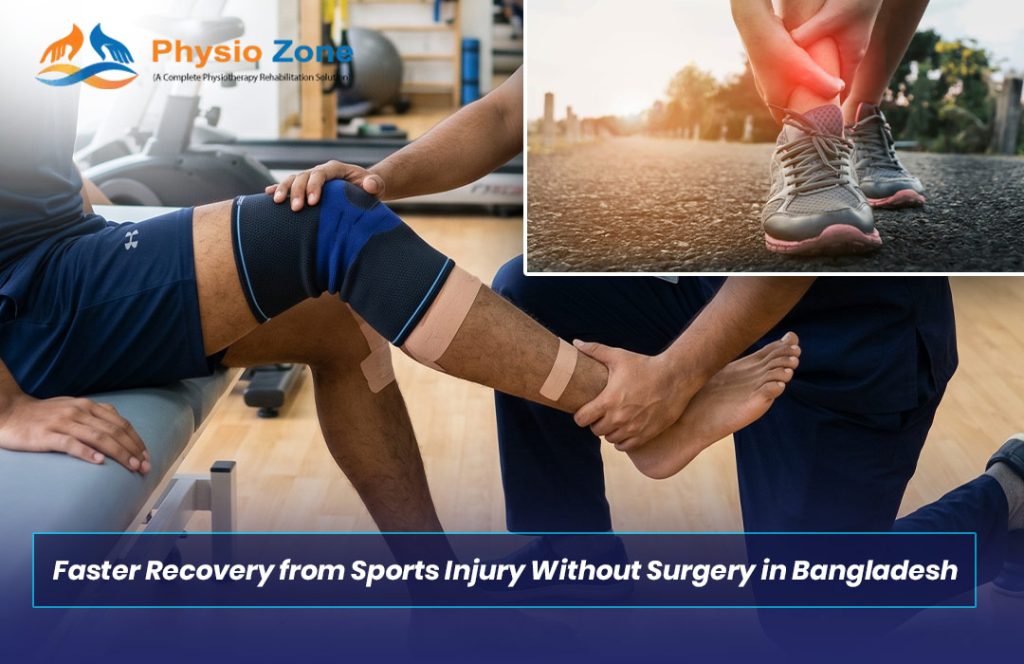
Why Surgery Is Not Always the Answer
The truth is very different. Modern physiotherapy and non-surgical treatment methods have advanced to the point where a large majority of sports injuries can be treated fully without any surgical procedure. From ankle sprains to partial ligament tears, from lower back pain to rotator cuff issues, non-surgical treatment works remarkably well when done correctly and consistently.
This guide explains everything you need to know about recovering from sports injuries without surgery in Bangladesh. It covers first aid, treatment options, the role of physiotherapy, recovery phases, and practical tips you can follow starting today.
“In clinical studies, non-surgical physiotherapy-based treatment shows recovery outcomes comparable to surgery for many common sports injuries, including ACL tears and rotator cuff strains, especially when treatment begins early and is followed consistently.”
2. Common Sports Injuries in Bangladesh
Before understanding how to recover, it helps to know which injuries are most common among athletes and active people in Bangladesh. Based on cases seen at physiotherapy clinics in Dhaka, the following injuries are reported most frequently:
| Injury Type | Common Sports | Treatable Without Surgery |
|---|---|---|
| Ankle sprain | Football, Cricket, Running | Yes |
| Knee ligament (ACL/MCL) sprain | Football, Basketball, Wrestling | Often Yes |
| Hamstring strain | Cricket, Athletics, Football | Yes |
| Shoulder rotator cuff strain | Cricket, Badminton, Swimming | Often Yes |
| Tennis/Golfer’s elbow | Badminton, Cricket, Tennis | Yes |
| Lower back pain | Weightlifting, Cricket, Rowing | Yes |
| Shin splints | Running, Football, Cycling | Yes |
| Stress fractures (minor) | Running, Athletics | Yes (with rest) |
Each of these injuries responds well to physiotherapy and other non-surgical approaches when managed properly. The key is to start treatment early, follow the correct protocol, and not rush the healing process.
3. Immediate First Aid: The RICE Method
The first 24 to 72 hours after a sports injury are the most critical. What you do immediately after getting hurt can either speed up your recovery significantly or make the injury worse. The universally recommended first-aid approach for soft tissue sports injuries is the RICE method.
After the acute phase passes (usually after 48 to 72 hours), you can transition to gentle heat application and light movement as directed by a physiotherapist. This is when proper professional treatment should begin.
4. Non-Surgical Treatment Methods
Modern sports medicine offers a wide range of effective non-surgical treatments. The right combination of these methods, guided by a qualified physiotherapist, can lead to full recovery in most cases. Here are the most commonly used and proven approaches:
Manual Therapy
Manual therapy involves hands-on techniques performed by a trained physiotherapist to improve joint mobility, reduce muscle tightness, and restore normal movement patterns. This includes joint mobilization, soft tissue manipulation, and myofascial release. It is especially effective for shoulder injuries, neck pain, and lower back issues.
Therapeutic Ultrasound
Therapeutic ultrasound uses sound waves to deliver heat deep into soft tissue. This promotes blood circulation, accelerates tissue healing, and reduces pain. It is commonly used for ligament injuries, muscle tears, and tendinopathies. The procedure is painless and is administered directly over the injured area during physiotherapy sessions.
Transcutaneous Electrical Nerve Stimulation (TENS)
TENS therapy uses low-voltage electrical currents to relieve pain. Small electrode pads are placed near the injury site, and the electrical impulses block pain signals from reaching the brain. It also stimulates the production of endorphins, which are the body’s natural painkillers. TENS is widely available at physiotherapy clinics in Dhaka.
Dry Needling and Trigger Point Therapy
Dry needling involves inserting thin needles into trigger points in muscles to release tension, improve blood flow, and reduce pain. It is particularly useful for chronic muscle tightness and sports injuries where muscle spasms are contributing to the problem. It is different from acupuncture and is specifically used in a physiotherapy context.
Kinesio Taping
Kinesio taping is a technique where a special elastic tape is applied to the skin over or around the injured area. The tape supports muscles and joints without restricting movement, reduces swelling by lifting the skin slightly, and provides sensory feedback to help with proper movement. Athletes often continue their daily activities with kinesio tape applied.
Shockwave Therapy
Extracorporeal shockwave therapy (ESWT) is a newer technology now available at leading physiotherapy centers in Dhaka. It delivers high-energy sound waves to the injury site to break down scar tissue, stimulate new blood vessel growth, and accelerate healing of tendons and ligaments. It is especially effective for chronic conditions like plantar fasciitis and shoulder tendinopathy.
- Laser Therapy: Low-level laser therapy reduces inflammation and promotes cellular repair in injured tissue.
- Hydrotherapy: Exercises performed in water reduce the load on injured joints while allowing movement and strength training.
- Orthotic Devices: Braces, supports, and custom foot orthotics help offload injured areas and protect them during recovery.
- Platelet-Rich Plasma (PRP): PRP injections use your own blood plasma to accelerate the healing of ligaments and tendons. Available at specialized clinics.
5. The Role of Physiotherapy in Recovery
Physiotherapy is the backbone of non-surgical sports injury recovery. A qualified physiotherapist does much more than apply machines to the body. They conduct a thorough assessment, identify the root cause of the injury, develop a personalized rehabilitation plan, and guide you through every stage of recovery.
In Bangladesh, physiotherapy as a profession has grown significantly over the last decade. Dhaka now has many qualified physiotherapy centers that offer specialized sports rehabilitation services. A good physiotherapist will:
Conduct a Full Assessment
Examine the injury thoroughly, review your medical history, assess movement, strength, and functional limitations before starting any treatment.
Create a Personalized Plan
Design a rehabilitation program based specifically on your injury, fitness level, sport, and recovery goals. No two injury programs are exactly the same.
Use Evidence-Based Treatment
Apply only treatment techniques that are supported by scientific research, including manual therapy, electrotherapy, and progressive exercise.
Teach Injury Prevention
Educate you on proper movement mechanics, warm-up routines, and strength training strategies to prevent the same injury from happening again.
Guide Return to Sport
Safely progress you back to your sport with sport-specific drills and tests to confirm you are ready to return to full activity without re-injury risk.
If you are in Dhaka, you can consult with a specialist physiotherapist at PhysioZone BD for a professional assessment and customized treatment plan.
6. Phases of Sports Injury Recovery
Recovery from a sports injury without surgery does not happen all at once. It follows a predictable set of phases, and understanding these phases helps you stay patient, track your progress, and know what to expect at each stage.
Phase 1: Acute Phase (Day 1 to Day 5)
This is the inflammatory phase. The body sends blood and immune cells to the injury site, causing swelling, pain, heat, and redness. Your job in this phase is to protect the injury, apply the RICE method, and reduce unnecessary inflammation. Heavy exercise must be avoided. Very gentle range-of-motion movements may be permitted if advised by a physiotherapist.
Phase 2: Sub-Acute Phase (Week 1 to Week 4)
Swelling begins to reduce and the body starts laying down new tissue. Physiotherapy treatment is introduced at this stage, including gentle manual therapy, electrotherapy, and light strengthening exercises. The goal is to restore movement, reduce pain, and begin rebuilding muscle strength without stressing the healing tissue.
Phase 3: Remodeling Phase (Week 4 to Week 12)
The new tissue formed during the sub-acute phase is immature and needs to be strengthened. Progressive exercise and functional training are the focus. Load on the injured area is gradually increased. Sport-specific exercises are introduced toward the end of this phase. This is the longest phase and requires the most patience.
Phase 4: Return to Sport Phase (Week 8 Onward)
The final phase involves returning to sport-specific activities in a controlled and gradual manner. A physiotherapist will run functional tests to confirm you are ready. Full return to competition should only happen when strength, movement, and confidence are fully restored on both sides of the body.
“Rushing back to sport before completing the recovery phases is the most common reason athletes re-injure themselves. One extra week of proper rehabilitation can prevent months of setback.”
7. Tips to Speed Up Your Recovery
Beyond formal treatment sessions, what you do in your daily life plays a major role in how fast you recover. The following practical tips are easy to follow and have a real impact on recovery speed:
Sleep 7 to 9 Hours Every Night
Most tissue repair happens during sleep. Growth hormone is released in deeper sleep stages and directly drives cell regeneration. Poor sleep significantly slows recovery.
Eat Enough Protein
Protein is the building block for muscle and connective tissue repair. Aim for at least 1.5 to 2 grams of protein per kilogram of body weight per day. Good sources include fish, eggs, chicken, dal, and milk.
Stay Well Hydrated
Dehydration slows circulation and reduces the delivery of nutrients to the injury site. Drink at least 2.5 to 3 liters of water per day during recovery, especially in the Bangladeshi heat.
Do Not Skip Your Home Exercises
The exercises given by your physiotherapist for home practice are not optional. They are as important as your clinic sessions. Consistency outside the clinic determines your pace of recovery.
Manage Stress Actively
High psychological stress raises cortisol, which slows tissue healing and increases inflammation. Practice light breathing exercises, spend time in nature, and avoid overthinking about the injury.
Avoid Smoking and Alcohol
Smoking reduces oxygen supply to healing tissue and dramatically slows collagen formation. Alcohol disrupts sleep quality and impairs the immune response needed for repair.
Keep Moving (Carefully)
Complete bed rest for more than a day or two is counterproductive for most injuries. Controlled, gentle movement maintains blood flow, prevents muscle wasting, and speeds recovery.
8. When to Seek Professional Help
While many mild sports injuries can be managed initially with the RICE method at home, there are clear signs that you need to see a physiotherapist or doctor without delay. Do not wait and hope the pain will go away on its own if you notice any of the following:
- Severe pain that does not reduce within 48 hours despite rest, ice, and compression.
- Inability to bear weight on the injured leg or ankle after 24 hours.
- A popping or cracking sound at the time of injury, which may indicate a ligament tear or fracture.
- Visible deformity around the joint or bone area.
- Numbness, tingling, or significant weakness in the limb below the injury.
- Swelling that is rapidly worsening and spreading beyond the injury site.
- Recurring injury in the same area, which means the initial injury was never fully rehabilitated.
If you are in Dhaka and are unsure about the severity of your injury, it is always safer to consult a professional. You can book a consultation with a specialist at PhysioZone BD in Dhaka for an expert evaluation.
9. Frequently Asked Questions
Yes, in many cases. Grade 1 and Grade 2 ligament tears can heal fully with proper physiotherapy and rehabilitation. Even some Grade 3 (complete) tears can be managed non-surgically, particularly in older or less active patients. The decision depends on the specific ligament involved, your age, activity level, and how your knee or joint functions after the injury. A qualified physiotherapist and orthopedic assessment will guide the best decision for your specific case.
Recovery time depends entirely on the type and severity of the injury. A mild ankle sprain can heal in 2 to 4 weeks with good physiotherapy. A partial ACL tear may take 3 to 6 months. Muscle strains typically take 2 to 8 weeks. The most important factor is not just time, but the quality and consistency of your rehabilitation throughout the recovery period.
Yes. Dhaka now has a growing number of qualified physiotherapy clinics offering professional sports rehabilitation services. The cost of physiotherapy in Dhaka is generally affordable compared to other countries. Some centers also offer package deals for multiple sessions. You can contact PhysioZone BD for information about their current session fees and consultation process.
Return to contact or high-impact sport should only happen when your injured limb has recovered at least 90 percent of the strength of your uninjured side, you can perform sport-specific movements without pain, and your physiotherapist has cleared you. Returning too early is the leading cause of re-injury. Always complete the return-to-sport phase of your rehabilitation before going back to match play.
Not necessarily. With proper and complete physiotherapy-based rehabilitation, most sports injuries heal well and allow full return to activity. The risk of long-term problems is higher when injuries are ignored, poorly treated, or when the person returns to sport before full recovery. Seeing a qualified physiotherapist early and completing the full rehabilitation program is the best protection against long-term issues.
10. Conclusion
Sports injuries are a part of an active life, but they do not have to mean months on the sidelines or a visit to the operating room. For the vast majority of injuries, non-surgical treatment through physiotherapy is not just a possibility. It is the preferred and most effective path to full recovery.
In Bangladesh, access to professional physiotherapy services has improved greatly. Athletes and active individuals in Dhaka can now receive world-class rehabilitation without leaving the country. The most important steps are to act quickly after an injury, follow proper first aid, and consult a qualified physiotherapist as soon as possible.
If you or someone you know has suffered a sports injury and wants to avoid surgery, do not wait. Early treatment leads to faster and more complete recovery. A good physiotherapist will assess your condition honestly and let you know whether non-surgical treatment is right for you.
To book a physiotherapy consultation in Dhaka with a qualified sports rehabilitation specialist, visit PhysioZone BD and take the first step toward a full and fast recovery today.
Ready to Start Your Recovery Journey?
Get a professional assessment from a qualified physiotherapist in Dhaka and recover faster without surgery.