
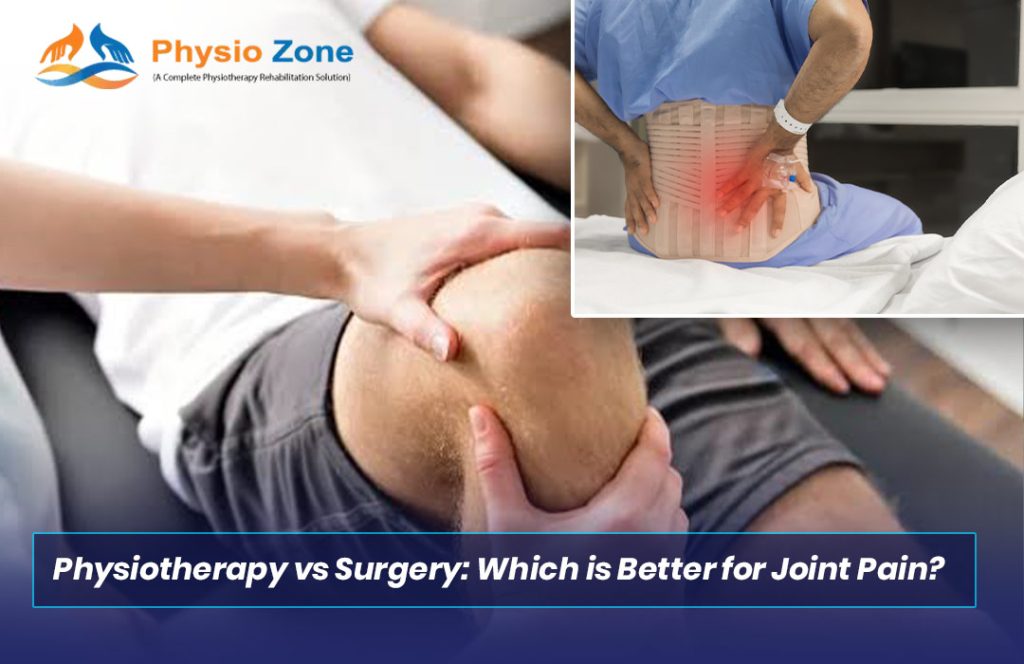
Joint pain is one of the most common reasons people visit a doctor or physiotherapy clinic. Whether it is your knee, shoulder, hip, or wrist, joint pain can make everyday tasks feel difficult and exhausting. When the pain becomes serious, many people face the same question: Should I go for physiotherapy or should I have surgery?
The answer is not always simple. Both options have their place, and the right choice depends on the type of injury, how serious it is, your age, your overall health, and your personal goals. This blog will help you understand both treatments clearly so you can make an informed decision.
At Physio Zone BD, we believe that many patients can recover fully through evidence-based physiotherapy — without needing to go under the knife.
What Causes Joint Pain?
Joints are the connecting points between bones. They allow your body to move. When a joint becomes damaged, inflamed, or injured, you feel pain and stiffness. Some of the most common causes include:
Osteoarthritis is the most widespread cause, where the cartilage inside the joint slowly wears down over time. Ligament tears, such as an ACL injury in the knee, are common among athletes and active individuals. Tendinitis, bursitis, meniscus injuries, rotator cuff tears in the shoulder, and post-fracture stiffness are also frequently seen in physiotherapy clinics.
Inflammatory conditions like rheumatoid arthritis can also cause severe joint damage if left untreated. Understanding the root cause of your pain is the first step toward choosing the right treatment.
What Is Physiotherapy?
Physiotherapy is a non-surgical treatment that helps the body heal through movement, exercise, manual therapy, and the use of therapeutic equipment. A qualified physiotherapist assesses your condition and designs a treatment plan tailored specifically for you.
What happens during physiotherapy sessions?
Your therapist will first evaluate your joint’s range of motion, strength, and pain level. They will then guide you through targeted exercises that strengthen the muscles around the joint, which reduces stress and improves stability. Manual therapy techniques such as joint mobilization, soft tissue massage, and dry needling may also be used depending on the condition.
Modern physiotherapy also uses equipment such as ultrasound therapy, TENS (transcutaneous electrical nerve stimulation), shockwave therapy, and laser therapy to accelerate healing. Heat and cold therapy, taping, and postural correction are also important parts of a comprehensive treatment plan.
Research published in leading medical journals shows that for many common joint conditions including knee osteoarthritis, rotator cuff injuries, and lower back pain, physiotherapy produces outcomes comparable to surgery, with far fewer risks and a much shorter recovery time.
What Is Joint Surgery?
Joint surgery involves a medical procedure where a surgeon physically repairs, reconstructs, or replaces part of the joint. Surgery is typically performed under anaesthesia and may require a hospital stay of one or more days.
Types of joint surgery
Arthroscopy is a minimally invasive procedure where a small camera is inserted into the joint to repair damage. Joint replacement surgery, such as total knee replacement or hip replacement, is performed when the joint is severely deteriorated. Ligament reconstruction, cartilage repair, and osteotomy (a procedure to realign the bones) are other common surgical options.
While surgery can be life-changing for the right patient, it comes with risks including infection, blood clots, nerve damage, prolonged recovery periods, and the need for extensive post-surgical physiotherapy.
Physiotherapy vs Surgery: Key Differences
Physiotherapy
- Non-invasive, no cuts or anaesthesia
- No hospital stay required
- Lower cost overall
- Minimal to no side effects
- Gradual, steady recovery
- Strengthens surrounding muscles
- Can be started immediately
- Treats the root cause of pain
Surgery
- Invasive procedure with anaesthesia
- Hospital stay often required
- Higher cost and longer process
- Risk of infection, bleeding
- Long post-operative recovery
- Still requires physiotherapy after
- Not always immediately available
- Best for structural damage
When to Choose Physiotherapy
Physiotherapy should almost always be the first line of treatment for joint pain. Medical guidelines in most countries recommend trying conservative treatment for at least three to six months before considering surgery for conditions like knee osteoarthritis, shoulder impingement, and chronic back pain.
Physiotherapy is especially effective in the following situations. If your pain is due to muscle weakness or imbalance, physiotherapy will directly target this problem. For ligament sprains and strains that have not caused a complete tear, exercise and manual therapy can fully restore function. In early to moderate arthritis, guided physiotherapy can significantly reduce pain and delay or prevent the need for surgery. Physiotherapy is also the best option for patients who are not suitable for surgery due to age, other health conditions, or personal preference.
The key advantage of physiotherapy is that it does not just reduce pain. It improves your overall physical function, teaches you how to protect your joint in the future, and reduces the risk of the same injury happening again.
When Surgery May Be Necessary
There are clear situations where surgery is the most appropriate choice. If a ligament is completely torn, such as a full ACL rupture in a young active person, surgical reconstruction is usually required for a stable return to sport. When a joint is severely damaged due to advanced arthritis and physiotherapy has not provided enough relief, joint replacement may be the right step forward.
Bone fractures that affect the joint surface, locked joints caused by loose cartilage or bone fragments, and certain types of meniscus tears that block normal movement are also conditions where surgery is often the better option.
It is important to understand that surgery is not a cure on its own. Almost every patient who has joint surgery will need physiotherapy afterwards to regain strength, mobility, and function.
Recovery and Rehabilitation
One of the most important factors people overlook is recovery time. Physiotherapy has no recovery period in the traditional sense. You begin treatment, follow your programme, and progressively improve over weeks to months depending on the severity of your condition.
Surgery, on the other hand, requires a period of initial rest and wound healing, followed by gradual rehabilitation. A total knee replacement may require three to six months before you can return to normal daily activities, and up to a year before you feel fully comfortable. During all of this time, physiotherapy is still required.
Studies consistently show that patients who undergo physiotherapy before and after joint surgery have significantly better outcomes, faster recovery times, and higher satisfaction compared to those who do not.
Common Joint Conditions and Best Treatment
| Condition | First Choice | Surgery If |
| Knee osteoarthritis | Physiotherapy | Severe bone-on-bone damage |
| Rotator cuff tear | Physiotherapy | Full thickness tear in active patient |
| ACL injury | Depends on severity | Complete rupture in active patients |
| Meniscus tear | Physiotherapy | Locking or mechanical symptoms |
| Hip osteoarthritis | Physiotherapy | Severe structural joint damage |
| Frozen shoulder | Physiotherapy | Rarely — only if unresponsive |
| Fracture affecting joint | Surgery first | Physiotherapy always follows surgery |
The Role of Physiotherapy After Surgery
Even when surgery is the right decision, physiotherapy is not optional afterwards. Post-surgical physiotherapy is what actually restores your strength, movement, balance, and confidence. Without it, surgery results are often disappointing.
At Physio Zone BD, we provide structured post-surgical rehabilitation programmes that are designed to get you back to normal life as quickly and safely as possible. Our team works closely with orthopaedic surgeons to ensure the rehabilitation protocol matches the surgical procedure performed.
If you have recently had a joint operation or are planning one, visit our physiotherapy services page to learn about our rehabilitation programmes, or read more about our approach on our about us page.
Conclusion
The debate between physiotherapy and surgery is not about which one is better in all cases. It is about which one is right for your specific condition, at this specific time in your life.
For the vast majority of joint pain cases, physiotherapy is the safest, most cost-effective, and most evidence-supported first option. It addresses the real causes of your pain, strengthens your body, and helps you prevent future problems. Surgery has its place for structural damage that cannot heal on its own, but it should never be the first step without trying conservative care.
If you are dealing with joint pain and are unsure where to start, the most important thing you can do is consult a qualified physiotherapist. They will assess your condition thoroughly and guide you honestly on whether physiotherapy can solve your problem or whether you need to see a surgeon.
Not sure where to start with your joint pain?
Our expert physiotherapists at Physio Zone BD are here to assess your condition and design a treatment plan that is right for you. Located in Uttara, Dhaka, we provide modern, evidence-based physiotherapy care.
Book a consultation at Physio Zone BD
Written by the clinical team at Physio Zone BD — a leading physiotherapy centre in Uttara, Dhaka. For appointments, call +8801978332936 or visit our blog section for more health guides.