
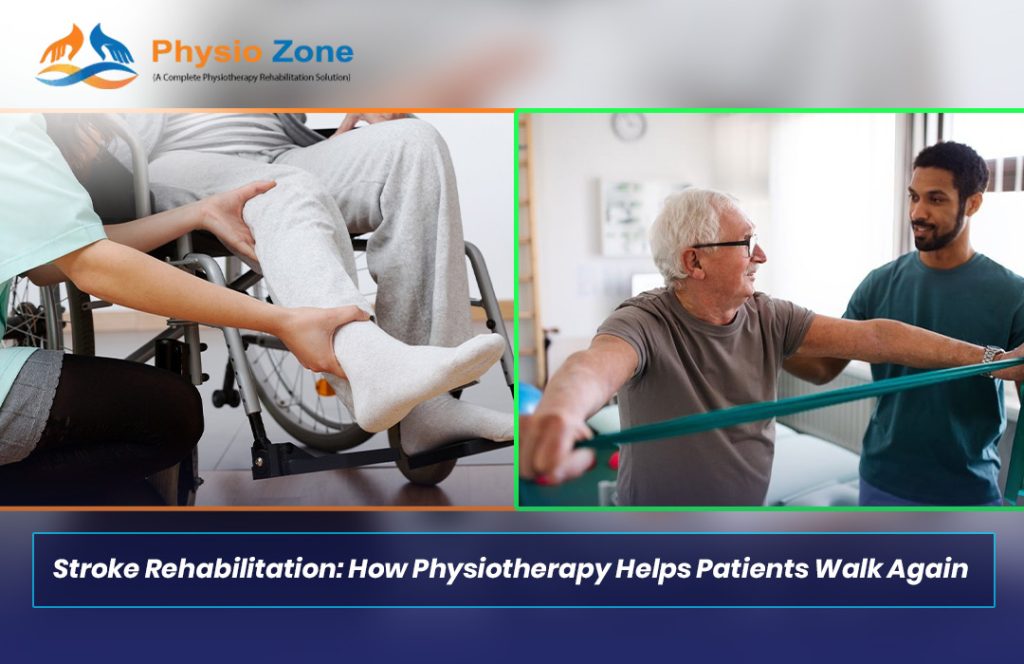
A stroke can suddenly affect a person’s ability to move, walk, speak, or perform daily activities. Many stroke survivors experience muscle weakness, balance problems, and loss of coordination.
The good news is that structured physiotherapy rehabilitation plays a vital role in helping stroke patients regain movement, rebuild strength, and learn to walk again safely. Early and consistent therapy greatly improves recovery outcomes and independence.
What Happens to the Body After a Stroke?
A stroke occurs when blood supply to part of the brain is interrupted. Because the brain controls movement, damage can lead to:
- Weakness on one side of the body (hemiparesis)
- Difficulty standing or walking
- Poor balance and coordination
- Muscle stiffness or spasticity
- Reduced hand control
- Fatigue and low endurance
The severity varies from person to person, but almost all patients benefit from rehabilitation therapy.
Why Early Stroke Rehabilitation Is So Important
Starting physiotherapy as early as medically safe helps the brain relearn movement patterns. This process is called neuroplasticity, where the brain forms new connections to restore lost functions.
Early rehabilitation helps:
✔ Prevent muscle shortening and joint stiffness
✔ Improve blood circulation
✔ Reduce risk of bed sores
✔ Restore sitting and standing balance
✔ Speed up walking recovery
Patients who begin therapy early often regain independence faster.
How Physiotherapy Helps Stroke Patients Walk Again
Physiotherapy treatment follows a structured recovery plan.
1. Bed Mobility Training
Therapists first help patients learn:
- Turning in bed
- Sitting upright
- Moving safely from bed to chair
These basic movements are essential before standing practice.
2. Sitting Balance Exercises
Patients practice maintaining upright sitting posture and shifting weight safely. Good sitting control is the foundation for standing and walking.
3. Standing Training
With therapist support, patients gradually:
- Put weight on affected leg
- Strengthen core muscles
- Improve posture alignment
- Build confidence in standing
4. Gait (Walking) Training
Walking recovery is done step-by-step using:
- Parallel bars
- Walker support
- Assisted stepping exercises
- Balance coordination drills
Over time, patients progress toward independent walking.
Important Physiotherapy Exercises for Stroke Recovery
⚠ Always perform under professional supervision.
Assisted Leg Lifts
Help the affected leg lift slowly while lying down.
Repeat 10 times to rebuild muscle activation.
Seated Marching Exercise
While sitting, slowly lift one knee at a time.
Improves hip control and walking preparation.
Supported Standing Weight Shift
Stand with support and gently shift weight from one leg to another.
This train’s balance is needed for walking.
Heel-Toe Practice
With therapist guidance, practice stepping forward slowly, placing heel first then toe.
Helps retrain natural walking patterns.
How Long Does Stroke Rehabilitation Take?
Recovery time varies depending on:
- Stroke severity
- Age and overall health
- Speed of starting therapy
- Consistency of rehabilitation
- Family support and home exercise
Some patients improve within months, while others may require long-term therapy. Continuous rehabilitation always produces better results than stopping early.
Family Support Is Critical for Recovery
Family involvement greatly improves stroke outcomes.
Caregivers should:
✔ Encourage daily exercises
✔ Help maintain safe walking environment
✔ Support emotional motivation
✔ Attend therapy sessions when possible
✔ Ensure medication and follow-ups are maintained
A positive recovery environment helps rebuild patient confidence.
When Should Stroke Patients Start Physiotherapy?
Physiotherapy should begin as soon as the doctor confirms medical stability.
Seek professional rehabilitation immediately if the patient has:
- Difficulty standing
- Weak arm or leg movement
- Balance problems
- Trouble walking
- Muscle stiffness
Delaying therapy can slow down recovery and increase long-term disability risk.
Conclusion
Stroke recovery is a gradual journey, but physiotherapy rehabilitation offers the best chance for regaining mobility and independence. With early intervention, structured walking training, and consistent exercises, many stroke survivors can successfully relearn how to stand, walk, and perform daily activities again.
Professional physiotherapy guidance ensures safe recovery, reduces complications, and helps patients return to a more active and independent life.